
If you’re dealing with hip pain from golfing, you’re not alone. While back and elbow injuries tend to get more attention, hip discomfort can significantly impact your swing and mobility on the course. Understanding what causes this pain and how to manage it is key to maintaining a healthy golf game, especially if you’ve had a hip replacement or are recovering from one.
Common Areas of Hip Pain for Golfers
1. Front of the Hip – Tensor Fasciae Latae (TFL)
The most common complaint of hip pain in golf is usually located in the front of the hip — about where the front pocket of a pair of slacks would be. This area houses the tensor fasciae latae (TFL) muscle, which commonly becomes problematic after prolonged sitting or playing golf.

2. Backside of the Hip – Iliac Crest
Another common area of complaint is the backside of the hip near the top of the iliac crest, which is higher up than you might think. Many people will point to the top of the hip and call it part of their back. In the diagram below, it’s labeled as the Iliac Crest.

3. Outer Side of the Hip – Lateral Hip Pain
The third common complaint we hear from golfers is deep aching or throbbing in the very side of the hip.
What Causes Hip Pain in Golfers?
Hip pain is usually caused by overuse, limited hip rotation, or incorrect swing mechanics. Swiveling or sliding through your hips instead of rotating properly can overstress your muscles and joints, leading to discomfort or inflammation over time.
How to Relieve Hip Pain for Golfers
Targeting the Tensor Fasciae Latae (TFL)
The most effective method we have found for immediate relief and an increase in hip rotation is to work on the tensor fasciae latae, or TFL, which we mentioned earlier. The TFL helps to internally rotate your hip. To work the TFL, take a lacrosse ball or any ball similar in size and place it on your TFL, then lay down on the ball. Roll it back and forth between your hip and the ground until you find a point that hurts, then start moving your leg side to side. (Watch the video at the end of this post to see a demonstration of this technique.)
Targeting the Gluteus Medius and Gluteus Minimus
The second area to work if you have hip pain is the gluteus medius and gluteus minimus, which attaches in the upper back part of your hip and works to externally rotate and laterally stabilize your hip.
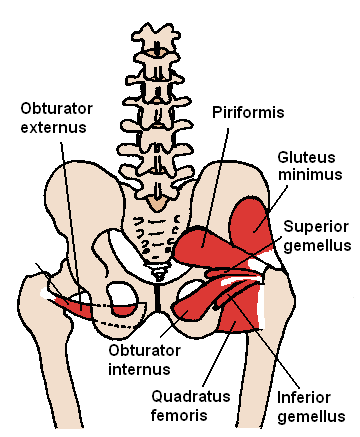
This area is particularly of note if you sway back and forth a lot during your golf swing. To work the glutes, you can use a ball the size of a softball or lacrosse ball, but the lacrosse ball is the better choice because it can reach smaller areas the softball can’t. Place the ball on the ground, then sit your glute onto the ball. Cross the leg on the same side as the glute you’re working over the opposite knee, then roll the ball between your glute and the floor until you find a point that hurts. Once you do, uncross your leg, then start moving it up and down and back and forth. (Watch the video at the end of this post to see a demonstration of this technique.)
Releasing Tension Around the Bursa and IT Band
The final area we’re going to talk about is the bursa, most commonly heard of in the context of bursitis.
To alleviate stress from the bursa, you have to loosen the tight band that comes down across it, the IT-Band. To do this, take a softball or foam roller (the softball will be more effective but more painful) and lay down with the ball below your bursa – on the side of your upper leg – and roll it around until you find a point that hurts. Then, move your leg back and forth or roll the ball side to side.
Hopefully these exercises help you to alleviate your hip pain or increase your mobility so you can swing faster, play better, and hurt less.
Improving your hip mobility and strength not only helps reduce pain but also supports a smoother, more powerful golf swing.
If you’re recovering from surgery or wondering “can you play golf after a hip replacement,” check out our full guide on playing golf after a hip replacement for detailed tips on mobility, exercise, and safe return-to-play timelines.
Preventing Future Hip Pain from Golfing
Once you’ve managed the immediate discomfort, the next step is prevention. A consistent mobility and strength routine tailored for golfers can make a world of difference, especially if your long-term goal is to get golf fit and build resilience against future injuries
Here’s what to focus on:
- Dynamic warm-ups: Start every round with gentle hip circles, lunges, or leg swings to increase blood flow.
- Strength training: Incorporate exercises like glute bridges, hip thrusts, and rotational cable pulls to build power and stability.
- Mobility programs: Structured mobility work, such as our Golf Mobility Programs, can help maintain flexibility while improving your range of motion.
- Proper swing mechanics: Work with a golf performance coach to correct habits like swaying or sliding that can stress your hips.
When to Seek Professional Help
If your hip pain persists or worsens despite rest and self-care, it’s best to consult a professional. At P4S Golf, our physical therapists and golf fitness experts specialize in identifying the root cause of your pain and developing personalized recovery and performance plans.
We use a data-driven approach through Golf Performance Assessments to evaluate your mobility, flexibility, and strength—ensuring your body is optimized for your swing.
Play Pain-Free and Keep Improving
Hip pain from golfing doesn’t have to keep you off the course. By focusing on mobility, flexibility, and proper movement patterns, you can reduce discomfort, boost your performance, and prevent future injuries.
If you’re recovering from a hip replacement or just want to play without pain, take the next step toward a stronger, healthier swing. Book your Golf Fitness Assessment today and learn how to move better, play better, and enjoy the game you love.

